
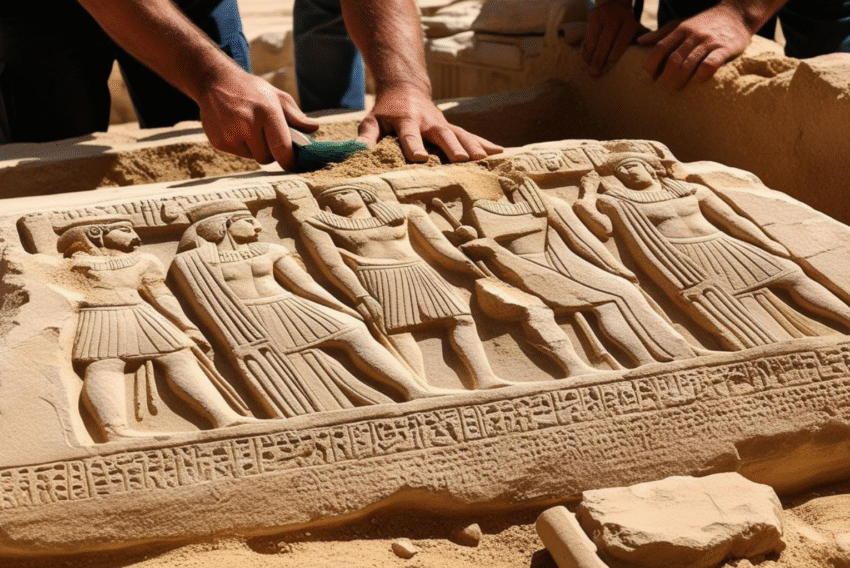
Nineveh has given up some of its secrets:
According to EuroNews, German archaeologists in Iraq who were excavating in Nineveh unearthed a giant monumental relief which showed King Assurbanipal who was the final ruler of the Assyrian Empire. On this stone slab two pagan deities were also depicted, Assur and Istar, or rather, Ishtar.
The findings on this remarkable stone slab also include what EuroNews considers to be a “fish genius” who “bestows salvation and life on the gods and the ruler,” along with what appears to be a hybrid of a man and scorpion.
This incredible discovery took place at the North Palace, and as excavation project leader professor Aaron Schmitt notes, “Among the numerous relief depictions of Assyrian palaces known to us, there is no depiction of the great deities,” making this find extra fascinating.
In the Bible, Nineveh stands as a symbol of both God’s mercy and judgment. The book of Jonah reveals how deeply entrenched in idolatry and violence the city was, yet God still extended an opportunity for repentance. Jonah’s reluctant mission to the Assyrian capital—where he warned of impending destruction—resulted in one of the greatest revivals in biblical history. From the greatest to the least, the people of Nineveh repented, and God spared them. However, later prophets like Nahum pronounced judgment on Nineveh for returning to its wickedness, showing the consequence of a people who rejected the mercy they once embraced.
This recent archaeological find sheds light on the spiritual climate of Nineveh in its final days: a culture deeply invested in false gods and supernatural beings. As the stones cry out with the images of gods that could not save, Scripture reminds us that only the God of Israel has the power to call a nation to repentance and stay His hand of judgment. source: https://charismanews.com/news/nineveh-and-the-ancient-gods-amazing-archaeological-find/
Probably the man/scorpion combo was meant to be some representation of the King or rulership since there are not many people who enjoy being stung by scorpions. This also implies, likely, the involving of some manner of pit, since scorpions often live there. All in all, the testimony of the stones is that Assyrians in Nineveh were not especially nice folks, but they did know enough to repent during an eclipse.