
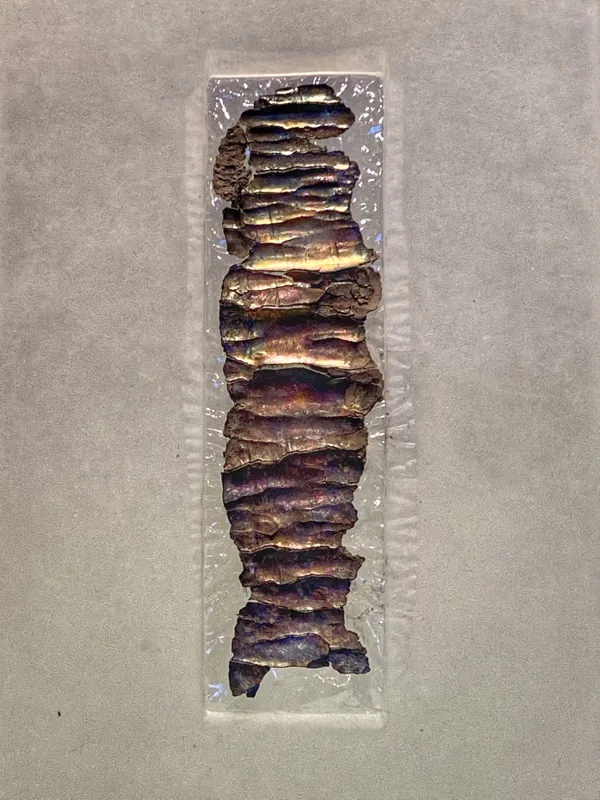
A curious finding poses more questions than answers:
Ketef Hinnom is a spur above the Hinnom valley overlooking Mount Zion. In 1979 Dr. Gabi Barkai 1979 initiated archaeological excavation at the site. These excavations yielded finds from several periods, including several rock-cut tomb dating to the First Temple Period.
Looters raided the burials already in antiquity, but they missed one repository, which contained a wealth of finds. A rare Phoenician glassware and gold and silver Jewelry were just some of the artifacts surfacing from this repository, but most significant – two rolled silver amulets. When opened in the laboratories of the Israel Museum, traces of letters were detected. Reconstructing the text, it proved to a variation of the priestly blessing from Numbers 6:24-26:
The Lord bless you and protect you.
The Lord make his face to shine upon you and be gracious to you.
The Lord lift up his countenance upon you and grant you peace.
This is the oldest copy ever found of Biblical text, pre-dating the Dead Sea Scrolls by at least four centuries. source: https://dannythedigger.com/ketef-hinnom/
Ketef Hinnom according to wikiland means shoulder–specifically the shoulder of Hinnom. When you click through to Hinnom, though, things get interesting:
Gehenna (/ɡɪˈhɛnə/ ghi-HEN-ə; Ancient Greek: Γέεννα, romanized: Géenna) or Gehinnom (Hebrew: גֵּיא בֶן־הִנֹּם, romanized: Gēʾ ḇen-Hīnnōm or גֵי־הִנֹּם, Gē-Hīnnōm, ‘Valley of Hinnom’) is a Biblical toponym that has acquired various theological connotations, including as a place of divine punishment, in Jewish eschatology. source: https://wiki.froth.zone/wiki/Hinnom?lang=en
What’s the Priestly Blessing doing in the “Shoulder of Hell”? One supposes if they were in the shoulder of Hell, they would likely want a blessing, but the blessings are contingent in part on making sure a person is not involved in the kinds of things that were likely going on in “Hinnom”.