
Genesis 49:10 reads like this: “The scepter will not depart from Judah, nor the staff from between his feet, until Shiloh comes and the allegiance of the nations is his.”
Debate has existed over what that means, but Scott Stripling has been digging at Shiloh and finding artifacts that cast the sentence in a specific light of understanding:
Ancient Shiloh was not a normal city but rather the hub for the priestly class.
“Prior to Jerusalem, it was all about Shiloh, so this was Israel’s first capital. Jerusalem remained in Jebusite or Canaanite hands for hundreds of years, whereas Joshua sets up the mishkan at Shiloh. And so we’re very interested in seeing the transition from say the Amorite/Canaanite culture into the Israelite culture. Is it measurable scientifically in some way?” asked Stripling. source: https://www.timesofisrael.com/listen-at-shiloh-archaeologist-finds-artifacts-hinting-at-biblical-tabernacle/
So Shiloh is where the tabernacle and priestly class were gathered previous to Jerusalem. This makes this a clear place to dig for artifacts relating to that establishment.
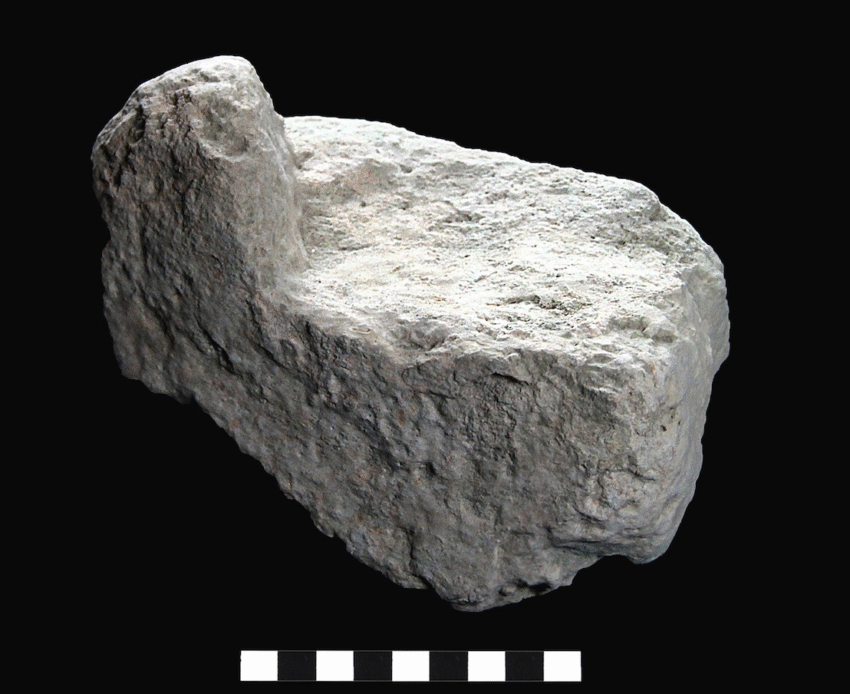
Stripling has found what outside experts are calling the horns of the altar which occupy a special distinction:
As written in the Bible, none of the stones were forged by a mason, but were rather found in this shape, said Stripling. Those discovered at Shiloh are similar in size to horns found in Beersheba, he said, which may give an indication of the size of the altar block as well. source: ibid
Additionally, there are several storage rooms around the perimeter of the area:
“If we’re assuming there was a sacrificial system there… well, what do you bring if you’re going to bring your tithe? You can’t make a secure online donation at Tabernacle.org; you can’t write a check. What are you going to do? You’re going to bring commodities. Barley, figs, pomegranates. And so what do we find? Storage rooms around the entire perimeter” of the ancient mound, said Stripling. source: ibid
Also found at the site are some clay pomegranates which would probably have been affixed to the robes of the High Priest along with bells:
Now I was told that while the High Priest was engaged in his purification rituals, the common priests who were standing outside the Sanctuary would be on high alert always listening for the steady jingling of the golden bells.
If that jingling STOPPED for a considerable amount of time, they would assume that the Lord had probably killed the High Priest due to some breach of protocol.
Then, they would pull him out of the Holy of Holies with the rope that was attached to his foot.
The logic behind this was simple.
Only the High Priest can enter the Holy of Holies.
Anybody else who tried to enter would be instantly killed by the Lord. source: https://messianic-revolution.com/e39-2-what-was-the-purpose-of-the-bells-attached-to-the-hem-of-the-high-priests-robe/
Stripling believes that the permanent tabernacle might be located on the summit of the hill or on the northern slope of the site.
It is possible that all of this is being found because the time of Shiloh’s coming is near which means that the nations should begin doing actions that start to either lead to that end, or confirm it. As the article was written in January of 2020, there is a lot that has transpired since to support that notion.